

NTSA's Instant Traffic Offence Notifications Are Now Live
If you drive on Kenyan roads, you need to read this. The National Transport and Safety Authority has officially launched a new traffic enforcement framework, and this time, it's not just a press release or a government pilot programme that quietly disappears. The instant traffic offence notification system is live, and it means the days of slipping through the cracks of traffic enforcement may genuinely be coming to an end.
6 min read
•
Published 5 months ago
Here's a breakdown of what's changed, how it works, and what you should be doing right now as a motorist.
So What Exactly Has Changed?
For a long time, traffic enforcement in Kenya meant one thing: a police officer flagging you down by the roadside, a tense negotiation, and more often than not, a "resolution" that never involved a receipt. That system, chaotic, corrupt, and largely ineffective, is what the government has been trying to dismantle.
In March 2026, NTSA rolled out the first version of its Instant Fines Traffic Management System. It was a camera-based automated system that would send SMS notifications to motorists caught committing traffic violations. The concept was solid, but the rollout hit turbulence fast. Kenyans sued, public backlash followed, and by the end of March, the system had been suspended.
But NTSA went back to the drawing board rather than quietly shelving the idea. After consultations with the Office of the Director of Public Prosecutions, the National Police Service, the Judiciary, and the Office of the Attorney General, they have come back with a revised and more legally grounded framework, and it officially went live on June 1, 2026.
How the New System Works
The new enforcement framework is built around a document called a Police Notification of Traffic Offence. Instead of immediately hauling you to court for a minor traffic violation, authorities will now issue you a formal notification, and you get to decide what happens next.
The offences targeted are what the law classifies as minor traffic violations under the Traffic (Minor Offences) Rules 2016. Think speeding, failure to wear a seatbelt, using your phone while driving, operating a vehicle without a valid inspection certificate, common infractions that clog up traffic courts and, frankly, weren't being effectively enforced anyway.
Once an offence is detected, either by a police officer during a routine check or through automated systems like speed cameras, CCTV, and digital traffic monitoring devices, a notification is generated and sent to the driver or the registered vehicle owner. That notification will spell out:
- The nature of the offence
- The date, time, and location it occurred
- The prescribed penalty
- How to pay
- The deadline to respond
Delivery can happen in several ways: personal delivery by a police officer, a notice affixed to your vehicle, or electronically through SMS, email, or NTSA's approved digital enforcement platform.
You Now Have Two Options When You Receive a Notice
This is the part that's different from the earlier system, and it matters a lot.
When you receive a traffic offence notification, you are not automatically convicted. You have two clear choices:
Option one: Admit liability and pay the fine.
You settle the prescribed amount within the stipulated period, and the matter is closed, no court appearance required. Fines under the Traffic (Minor Offences) Rules range from Ksh 500 to Ksh 10,000 depending on the offence.
Option two: Dispute the allegation in court.
If you believe the notification is wrong, or you want to contest it for whatever reason, you have the right to take the matter before a magistrate.
The key shift here is that you no longer have to appear in court immediately for minor offences. The system is designed to unclog the justice system while still holding drivers accountable. It's a more proportionate response, and frankly, a fairer one.
What Happens If You Ignore the Notice?
Don't. That's the short answer.
If you fail to pay or respond within the given period, things escalate quickly. Unpaid fines will accrue interest. More significantly, both the vehicle and the driver with pending fines will be locked out of NTSA service platforms. That means no renewing your driving licence, no vehicle inspection, no transfers, nothing, until the fine is settled.
In a country where nearly every road-related transaction passes through NTSA's systems, that kind of block is a serious inconvenience. It's designed to be.
The Technology Behind It
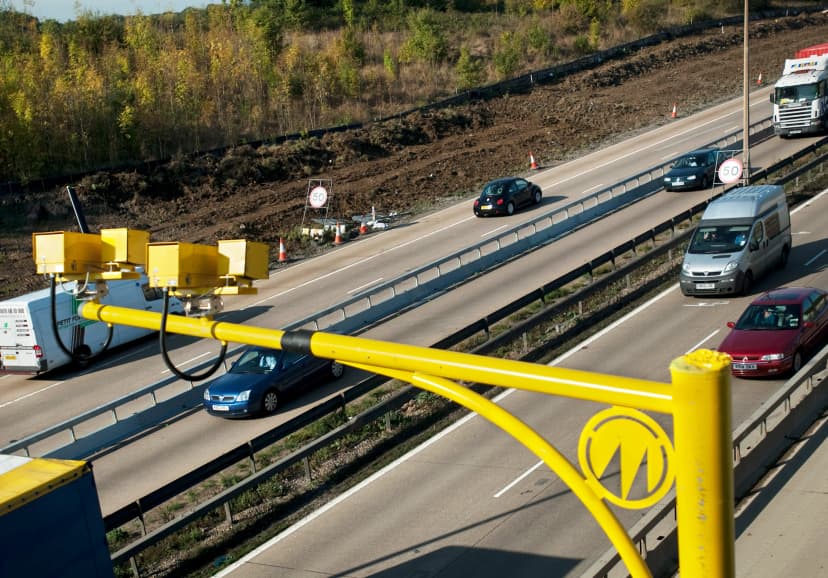
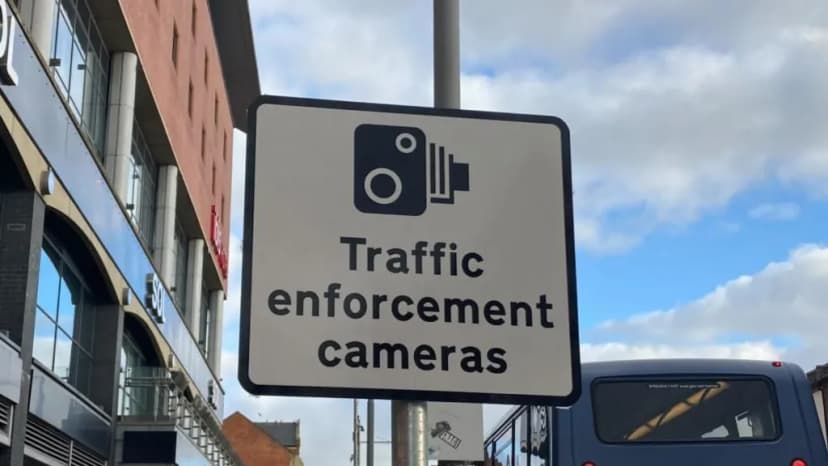
This isn't a manual system running on goodwill and spreadsheets. The enforcement infrastructure involves smart traffic cameras being deployed across Kenyan roads, linked directly to NTSA's databases. The cameras automatically detect violations and transmit alerts that are tied to a driver's profile through the smart driving licence system.
The whole project was approved by Cabinet and is being run as a 21-year public-private partnership involving KCB Bank Kenya and Pesa Print. Over 1,000 cameras are eventually expected to be deployed across the country. NTSA Director-General Nashon Kondiwa has been clear that the system is "fully automated and operates without human intervention", a direct response to the corruption concerns that plagued roadside enforcement for years.
The broader vision is part of a transport modernisation programme that also includes smart driving licenses and a digital mobile licence wallet for paying penalties.
Source: BBC
Why This Matters Beyond the Fine Itself
The numbers behind Kenya's road safety crisis are grim. In 2025 alone, road crashes claimed more than 5,100 lives and caused an estimated Ksh 450 billion in economic losses through medical costs, lost productivity, and property damage. President Ruto has publicly questioned why camera-based enforcement took this long to implement, and he directed the Ministry of Roads and Transport to move quickly.
The instant fines system is partly about revenue, yes, but it's primarily a road safety play. The theory is straightforward: if consequences are instant, consistent, and unavoidable, behavior changes. A driver who knows there's a camera at a dangerous stretch of road and that running a red light will land in their inbox within minutes is less likely to run the light.
Whether that theory will hold in practice for Kenya is something time will tell. But the intent is clearly to create a deterrence mechanism that doesn't rely on the luck of being stopped by the right officer on the right day.
What You Need to Do Right Now
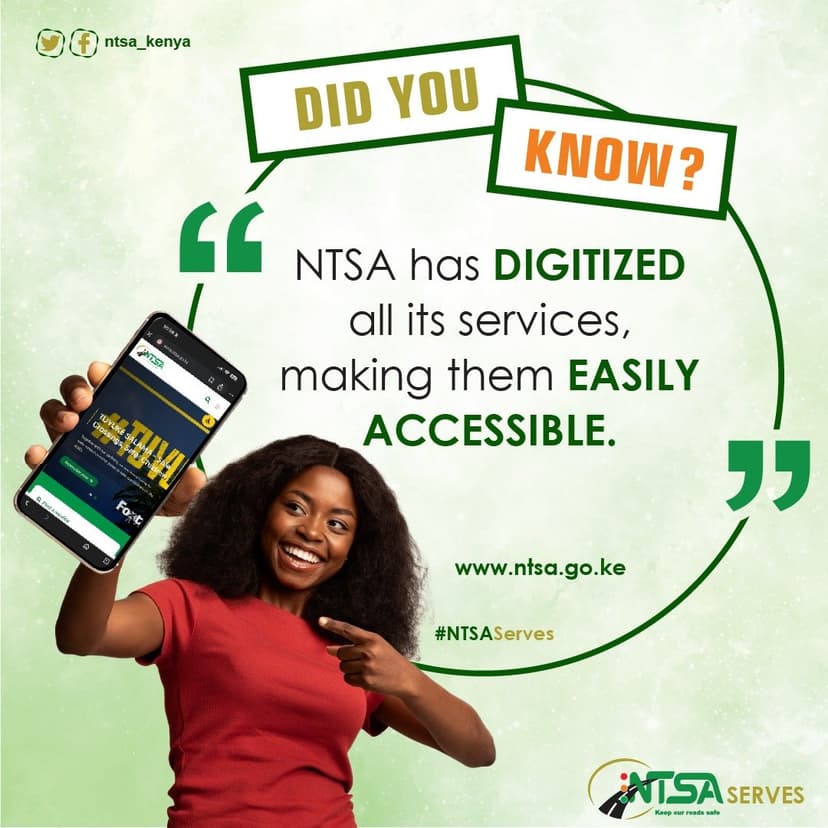
NTSA has already sent out a clear directive: update your contact details on their digital platform. Specifically, make sure your mobile phone number, email address, and vehicle registration number are current and accurate.
If your phone number is outdated and a notice gets sent to a number you no longer use, that is not NTSA's problem, it is yours. The responsibility to receive notifications falls on the registered owner of the vehicle, and the system assumes your contact details on record are correct.
Log in to the NTSA portal, check your details, and update anything that's out of date. It takes a few minutes and could save you a lot of headaches down the road.
Also worth doing: familiarize yourself with what counts as a minor traffic offence under the Traffic (Minor Offences) Rules 2016. NTSA has published a detailed FAQ on its website. Go through it. Ignorance of the specific offences covered is not a defense.
Source: NTSA
The Road Ahead
There's already a court case scheduled to oversee aspects of the system's rollout, with a mention date set for April 2026, a sign that the legal conversation around this isn't entirely settled. Advocacy groups and legal observers have raised questions about public awareness gaps and whether motorists sufficiently understand which offences are covered and at what penalty levels.
Those are legitimate concerns, and NTSA will need to keep the public communication strong and consistent as this scales up.
But the direction is clear. Kenya is moving, however messily and however incrementally, toward a traffic enforcement model that is digital, automated, and harder to game. The era of roadside discretion as the primary mode of enforcement is being replaced by something more systematic.
For Kenyan drivers, the message is simple: update your details, know your rights, and drive like there's a camera watching. Because increasingly, there is.
This article is based on official NTSA communications and publicly available reporting on the launch of the minor traffic offences framework effective June 1, 2026.